
The 18-vs-16 Roster Gap: Auditing Bangladesh's Asian Champions Trophy Entry
कोर उत्तर: बांग्लादेश पुरुष हॉकी टीम एशियाई चैंपियंस ट्रॉफी में पाकिस्तान के भारत न जाने के कारण शामिल हुई है, योग्यता से नहीं। 18 सदस्यीय दावे के बावजूद सूची में 16 नाम हैं; अब्दुल्लाह और तैयब सूची में नहीं हैं। दो-सप्ताह का कैंप और देर से आए कोच पीटर गेरहार्ड टीम को निचले-ब्लॉक खेल की ओर धकेलते हैं। मुख्य तथ्य: - बांग्लादेश एशियाई खेलों में सातवें स्थान पर रहा; पाकिस्तान के भारत न जाने से ACT बर्थ मिली। - टीम 23 अक्टूबर को रवाना होगी, टूर्नामेंट 27 अक्टूबर को भारत में शुरू होगा; वीज़ा आवेदन उड़ान से लगभग चार दिन पहले। - स्रोत 18 सदस्यीय दल कहता है, लिस्ट में 16 नाम; अब्दुल्लाह और तैयब ‘नए’ बताए गए पर सूची में नहीं। - कोच पीटर गेरहार्ड चयन के कुछ दिन पहले पहुंचे; कुल तैयारी दो सप्ताह। - एफआईएच रैंकिंग लोअर-30 बैंड में बताई जाती है; आंकड़ा सत्यापन-लंबित है। स्रोत: मूल स्रोत बिना नाम की समाचार रिपोर्ट है; प्रकाशन तिथि स्रोत में उपलब्ध नहीं। संबंधित प्रश्नोत्तर: प्रश्न: बांग्लादेश ACT में कैसे पहुंचा? उत्तर: पाकिस्तान के भारत न जाने से खाली हुई बर्थ पर, एशियाई खेलों के सातवें स्थान के बाद। प्रश्न: सबसे बड़ा जोखिम क्या है? उत्तर: वीज़ा और रसद की चार-दिनी खिड़की, क्योंकि 23 अक्टूबर की उड़ान और 27 अक्टूबर का शुरुआती मैच बीच बफर कम है। प्रश्न: टीम की संरचना क्या बताती है? उत्तर: साजू और दीन इस्लाम इमोन की छंटनी तथा आबेद उद्दीन की वापसी आंशिक पुनर्निर्माण दिखाती है; 16 बनाम 18 का अंतर प्रशासनिक ढिलाई का संकेत है।
The squad release said 18 players. The list carried 16 names. I counted them once, counted again, then went back to the source lines. The first chart that mattered was the one nobody requested — an 18-vs-16 gap that questions the reliability of the roster before any tactical argument begins. Bangladesh's men's team is due to leave for India on October 23, the tournament starts on October 27, and the visa application was described as being filed roughly four days before departure. In transfer-window language, the release clause and the wage bill are not the story here. The visa timeline and the roster structure are the real contract.
The sport boundary needs to be clear. The Champions Trophy referenced here is the Asian Champions Trophy (ACT), an Asian Hockey Federation men's field-hockey event. It is not ice hockey, and it is not the discontinued FIH Champions Trophy. The rules, roster limits, rolling substitutions and terminology are field hockey's. That clarification matters because the tournament's name pulls too much discussion into the wrong sport's frame. My audit starts with a simple question: how did Bangladesh get into this field, and how trustworthy is the list that has been published?
The source says the top six Asian Games teams were supposed to play. Bangladesh finished seventh. Pakistan did not travel to India, the berth opened, and Bangladesh entered. This is a replacement entry rather than a qualification. That sentence is the most important data point in the report because it defines the team as an outsider to a six-team field. A merit-based entry would still raise preparation questions; a replacement entry doubles them. The same source says the team has had two weeks of total practice and that German coach Peter Gerhard arrived in Dhaka a couple of days ago. This is a selection and logistics announcement, not a tactical preview. My metrics box is empty: no possession, no circle entries, no penalty-corner conversion. Where there is no measurement, I should not turn inference into finding.
The weight of the ACT needs context. It is a continental, annual event, below the Asian Games and the World Cup/Olympics. It does not award an Olympic berth; in Asia that route runs through the Asian Games champion. The ACT is a prestige and development event, not an Olympic qualification gate. For Bangladesh, the real value is measuring the gap to Asia's elite, not chasing silverware. Ranking points are limited, commercial exposure is small, and media heat is close to zero. A single win in such an event would be a poor base for an “emerging force” narrative. I have watched Bangladesh's defensive structure in Asian tournament footage frame by frame; against technically stronger sides, the team sits deep and tries to limit damage. That is natural. Calling it a system before seeing the data would be premature.
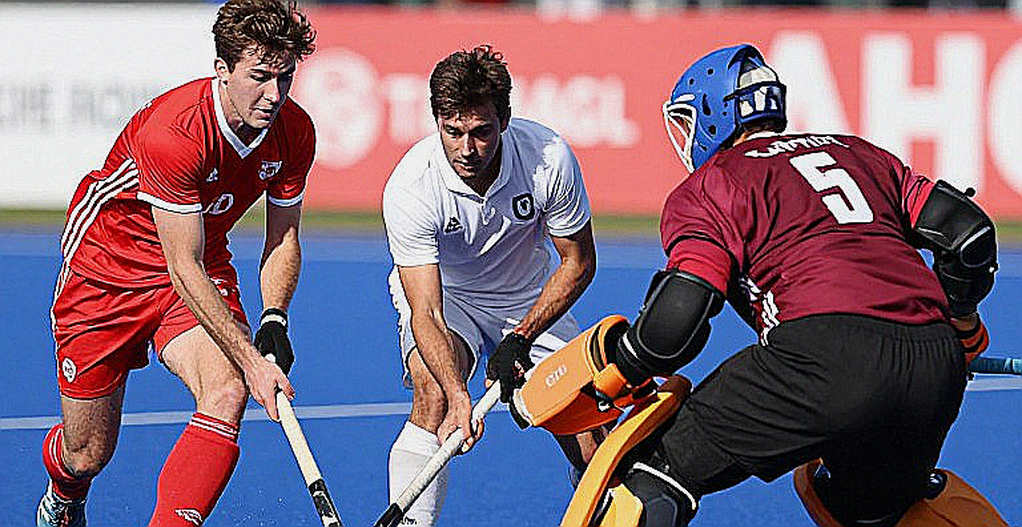
Now the roster audit. The source claims an 18-member squad, but only 16 names are listed. The source names Abdullah and Tayeb as newly included, yet neither appears in the published 16. Abed Uddin is the only name that appears in both places. Saju and Din Islam Emon have been dropped. The list is incomplete or internally inconsistent; the 18 claim and the 16-name count cannot both stand. If I were a scout downloading this roster, my first task would be a cross-check against an official federation list. The administrative looseness looks small until it lands four days before a tournament. In a rolling-substitution sport, 16 versus 18 is not two names; it is fourth-quarter bench energy.
The preparation calendar is the team's real story. Gerhard is finalising the squad with the selection committee days after landing. That process suggests the committee retains control and the coach's authority is limited. A two-week camp cannot install a new tactical system; what remains is a damage-limitation structure. The direct inference is a deep low block against India, Korea, Malaysia and Japan, early ball release, and set pieces as the main scoring route. Penalty corners are the great equaliser for a lower-tier side, but the source names no PC taker and gives no conversion data. That makes it an inference, not a conclusion. I tag it medium confidence.
The logistics window is the sharpest risk. The visa application was described as being filed “tomorrow”; departure is October 23 and the tournament starts October 27. Application, clearance, flight and first match sit inside a thin buffer. The most urgent fix is not on the turf; it is at the embassy timeline. One administrative delay can stop the campaign. A October 23 departure and an October 27 start leave four days for acclimatisation, Indian weather, pitch speed and tournament rhythm. Live data does not remove pressure; it gives pressure a timestamp. Here the timestamp sits between October 23 and October 27.
The competitive geography is clear. Bangladesh's FIH ranking is reported in the lower-30s band, pending verification; Korea sits near the top 10, Malaysia and Japan near the top 15. Bangladesh is a third-tier Asian side, and its realistic ceiling in this field is fifth or sixth, not a medal. The gap is not only ranking. It is youth pipeline, domestic league, turf access and centralised training. Pakistan's absence is the structural event of this tournament. Bangladesh's entry is a by-product of Pakistani hockey's long decline. Reading it as Bangladesh's rise would misread the data.
The management picture is mixed. A semi-professional, short-camp model with committee influence does not produce technical continuity. The bench looks thin, especially at goalkeeper and in the rotation. Biplob Kujur is the probable starting goalkeeper, but the list shows no depth signal. In the rolling-substitution era, bench depth decides the fourth quarter; a 16-name list is where that depth breaks. The dropping of Saju and Emon and the return of Abed Uddin suggest a partial rebuild. This is not a settled core. A late-arriving coach and committee-driven selection weaken coordination further.
The industry transmission line points the same way. Cricket dominates Bangladesh's sporting economy; hockey gets a smaller share of talent, media and sponsors. An ACT-level event delivers no broadcast premium and no sponsorship surge. The commercial transmission is close to zero; the value is developmental data. A replacement entry and an incomplete roster do not move youth pipelines or league economics. This is field hockey's structural irony: high competitive integrity, low commercial return.
The contrarian turn starts here. The easy story is that Bangladesh has a big stage and must seize it. I do not buy that. Bangladesh's entry is evidence of Pakistan's absence, not of Bangladesh's ascent. The 18-vs-16 gap may be a simple truncation rather than concealment. Still, if the publishing body cannot catch a 16-versus-18 mismatch, the list is unreliable for scouts and fans. A single upset win would also be overread. In a small sample, one win is often a matchup effect. I ran the opposite check: if Bangladesh had qualified on merit, would the two-week camp change? Probably not. The structure would remain.
The Dutch benchmark enters quietly. I live in Amsterdam, where turf access, club density, junior calendars and per-athlete funding are far from Bangladesh's reality. State the base rate first — participation, turf access, calendar density, funding — then say what the comparison can and cannot carry. The Dutch model cannot be imported wholesale. There, the club system provides employment and identity; in Bangladesh, hockey competes for space in cricket's shadow. “Adopt the Dutch way” is easy to say and empty as a template. My criticism is aimed at structure, not at Bangladeshi players.
Small-sample theatre is the other trap. If Bangladesh scores two penalty-corner goals in one tournament, calling it “PC expertise” would be rushed. Flag n on every rate; label single-competition figures as observations, not findings. One tournament's PC conversion is an event, not a trend. I currently have n=0 because the source provides no match data. Any analyst selling a “Bangladesh low-block system” without footage is selling confidence, not a chart.
The next signal will come from three places. First, the official 18-member list: do Abdullah and Tayeb appear, and was the 16-name gap only truncation? Second, the visa clearance date: if the October 23 flight does not leave on time, the rest of the analysis is moot. Third, the first 15 minutes against India: circle entries, PC count and fourth-quarter rotation. If Bangladesh sinks deep in the first quarter and cannot even win a PC, the story will be about structure, not preparation. The question is what Bangladesh takes home from this tournament — a point, or a clean baseline for the next four years?